

Alzheimer Day Highlights Research Advances and Community Engagement
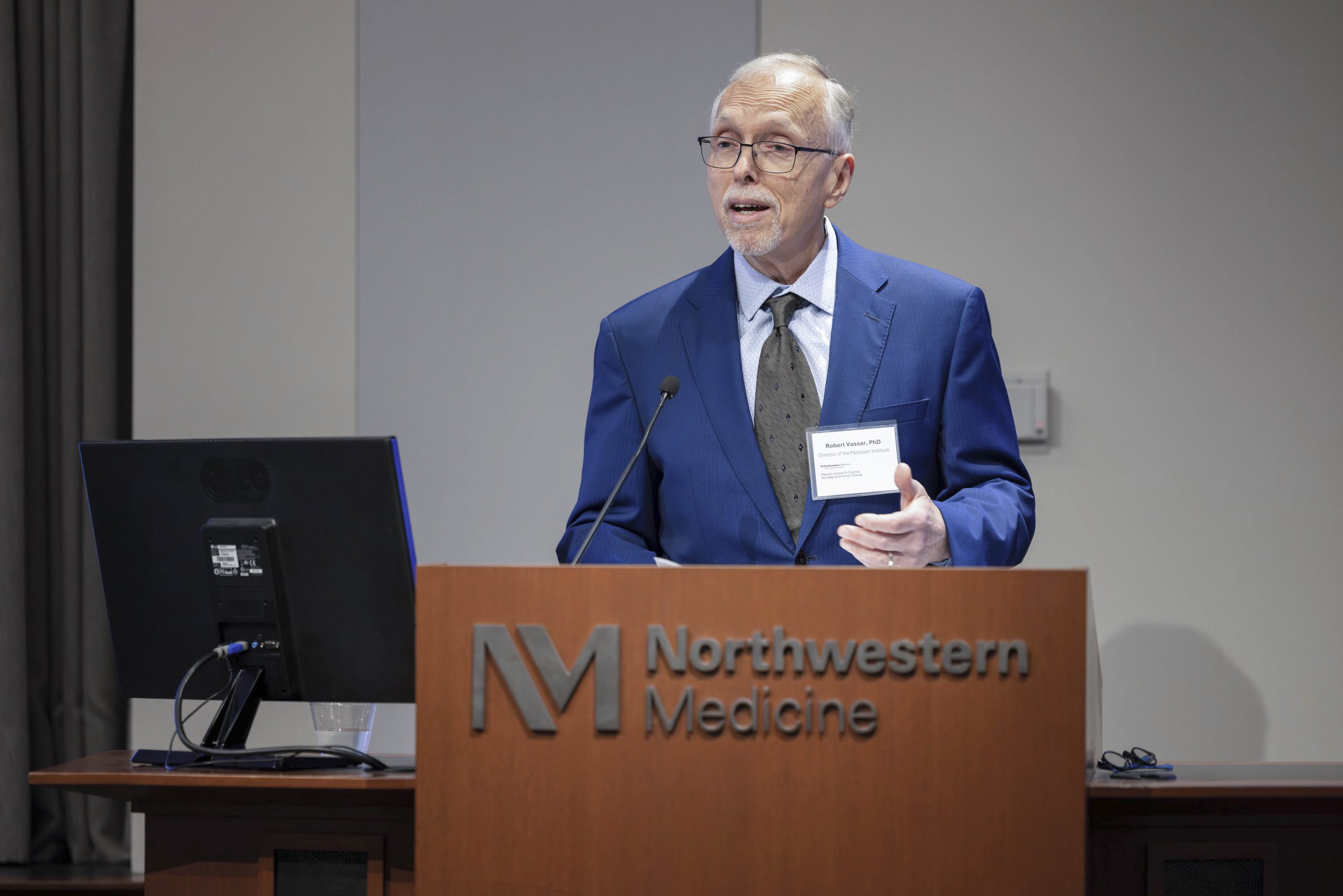
Faculty, clinicians, investigators and community members gathered on May 19 for Alzheimer Day, an annual conference dedicated to advancing understanding of dementia and connecting cutting-edge research with patients and families.
Hosted by the Mesulam Institute for Cognitive Neurology and Alzheimer’s Disease, Alzheimer Day is designed to showcase the latest discoveries in Alzheimer’s-related dementia and aging while fostering dialogue between scientists and the broader community.
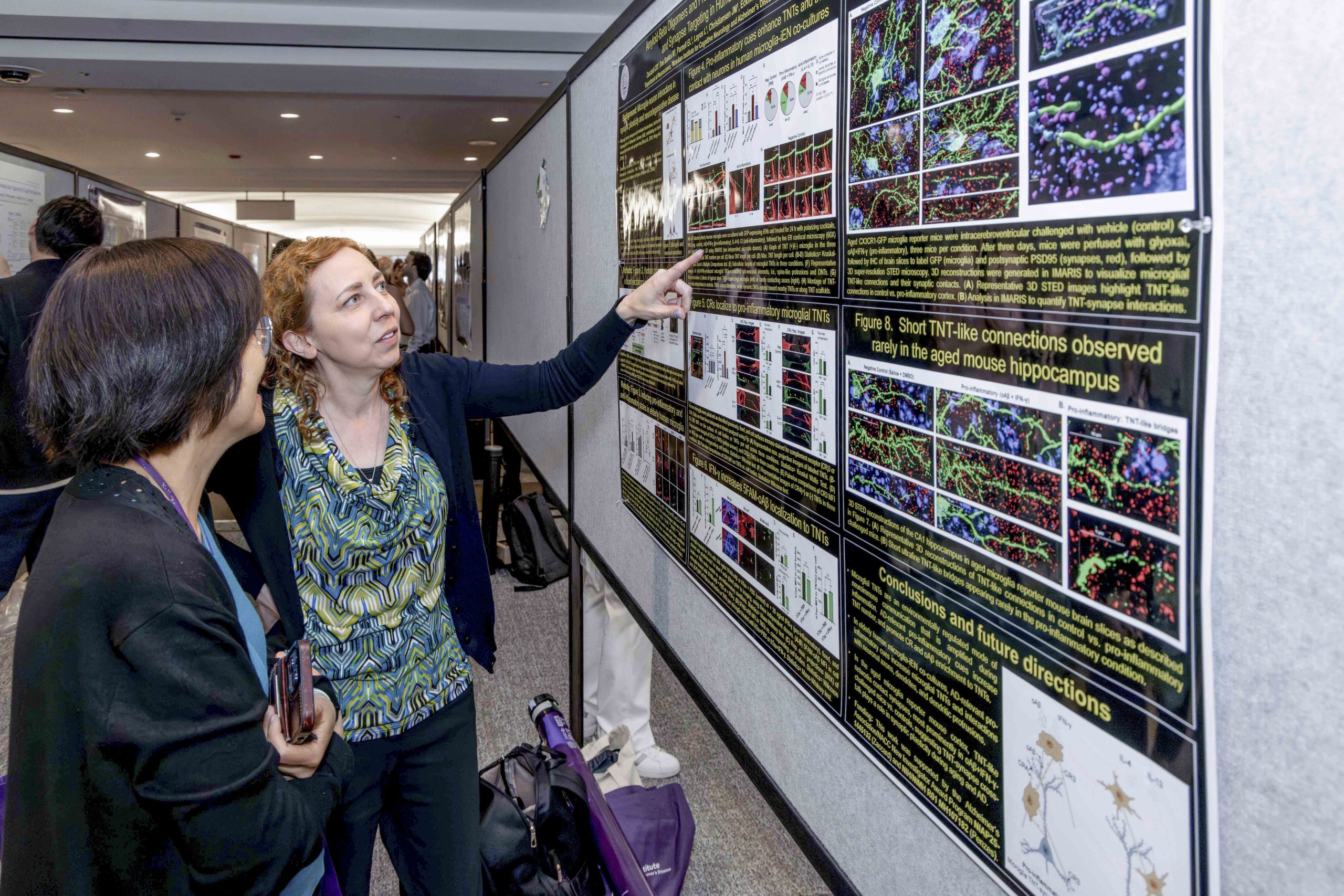
This year’s event brought together investigators from across Feinberg for a day of lectures, research poster presentations and a community-focused panel discussion.
Robert Vassar, PhD, the Davee Professor of Alzheimer Research in the Department of Neurology and director of the Mesulam Institute, welcomed attendees and emphasized the center’s commitment to scientific discovery and patient-centered care.
“It’s my great pleasure to welcome you to the 32nd annual Alzheimer Day and give you an update on the progress we’ve made at the institute,” Vassar said. “I want to thank all of our patients and their care partners and families who selflessly participate in our studies. Without your altruism, we could not do our research to understand the devastating diseases that we study.”
Tamar Gefen, ‘15 PhD, ‘12 MS, associate professor of Psychiatry and Behavioral Sciences, announced the winners of the Marie and Carl Duncan Prize in Memory Disorders. Established in 2006, the award recognizes accomplishments in clinically relevant areas of scientific inquiry.
Malik Nassan, MD, assistant professor of Psychiatry and Behavioral Sciences in the Division of General Psychiatry, and of Neurology in the Division of Behavioral Neurology, was awarded for his research investigating the genetic architecture of middle-onset Alzheimer’s disease.
Christopher Mazurek, a student in the laboratory of Molly Mather, PhD, assistant professor of Psychiatry and Behavioral Sciences, was also named a winner of the prize. His research analyzed associations between modifiable risk factors for dementia and cognitive “SuperAging.”
Additionally, Joshua Pasaye, a clinical research coordinator at the Mesulam Institute, won for his research focusing on distinct cognitive trajectories in SuperAgers.
The keynote Mendelson Lecture was delivered by Ronald C. Petersen, MD, PhD, a leading neurologist and the Cora Kanow Professor of Alzheimer’s Disease Research at the Mayo Clinic. His lecture explored the latest developments in diagnosis, treatment and ongoing clinical research.
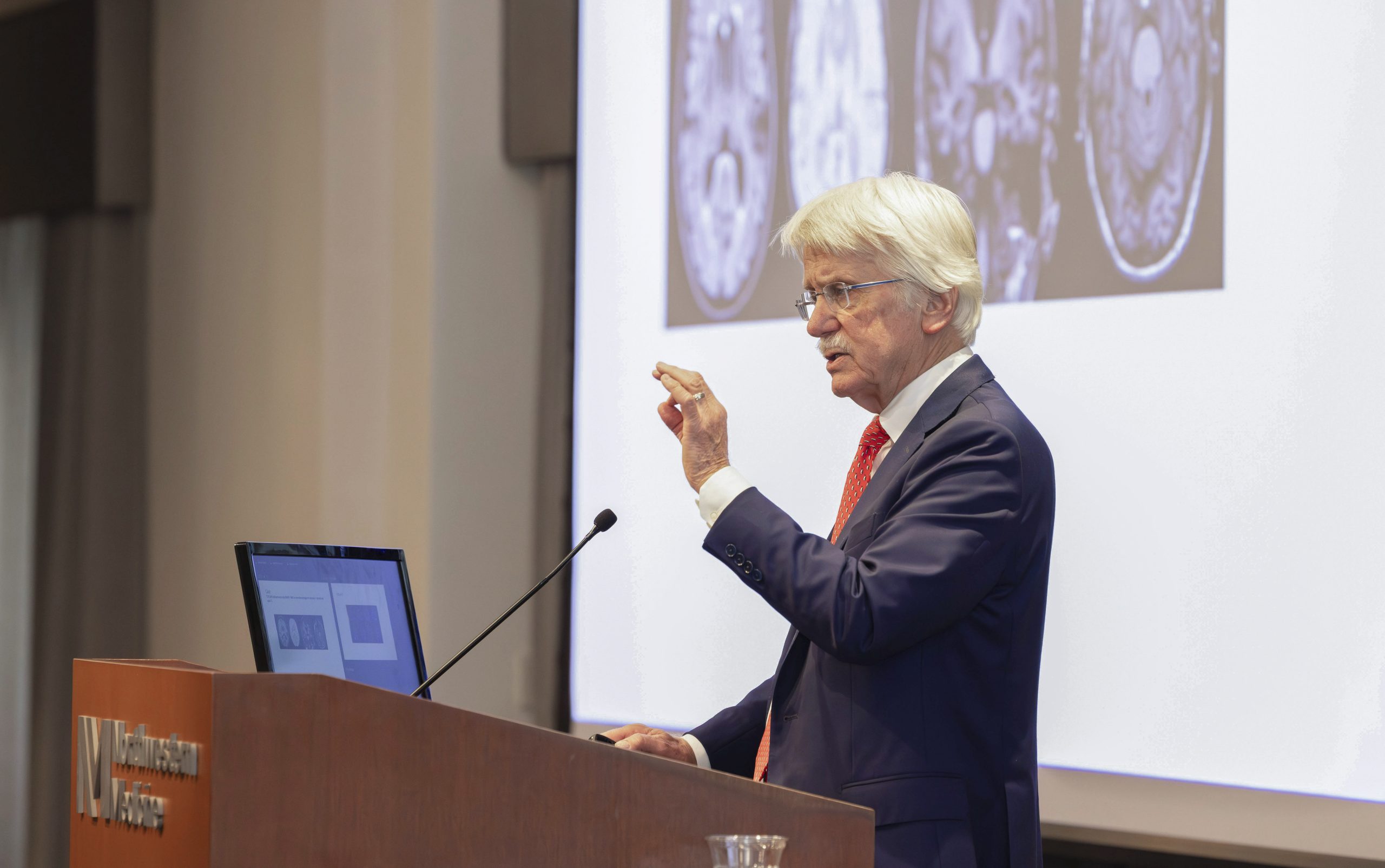
“I wanted to give an overview of where Alzheimer’s disease as a field is today with regard to research and medical care,” Petersen said. “We’ve made great strides in diagnosing and categorizing the types of dementia. We still have a way to go on slowing these diseases.”
Throughout the day, attendees heard updates on emerging therapies, biomarkers and the evolving understanding of Alzheimer’s progression.
Following a research poster session, a symposium focused on quality of life for people with Alzheimer’s and dementia was presented by Sandra Weintraub, PhD, professor of Psychiatry and Behavioral Sciences.
“It’s important to understand the symptom evolution in dementia, and how families and professionals deal with these symptoms,” Weintraub said during the presentation, which focused on how dementia symptoms evolve over time and how both families and professionals can respond more effectively.
The symposium then allowed community members to pose questions to a multidisciplinary panel featuring experts in speech-language pathology, neurology, occupational therapy and social work, highlighting the importance of comprehensive care for individuals living with dementia.
Together, they discussed practical strategies for improving quality of life, supporting caregivers and integrating clinical care with community resources.
“Most often, when I meet with a family and a person living with dementia for the first time, they don’t know why they’re meeting with me,” said Lauren Dowden, MSW, LCSW, clinical social worker and assistant director of the Outreach, Recruitment, Community Engagement Core at the Mesulam Institute.
“Alzheimer’s and dementia are relational diseases or family diseases. While the person with the diagnosis is going to be experiencing the disease in a very specific way, the family is too, and they’re going to have to adjust to ongoing changes. My role is to learn about what’s important to them, build on their strengths, and invite the family to help them adapt to the changes.”
Legal Disclaimer:
EIN Presswire provides this news content "as is" without warranty of any kind. We do not accept any responsibility or liability for the accuracy, content, images, videos, licenses, completeness, legality, or reliability of the information contained in this article. If you have any complaints or copyright issues related to this article, kindly contact the author above.
