

Novel biomarker research offers new hope in the fight against colorectal cancer
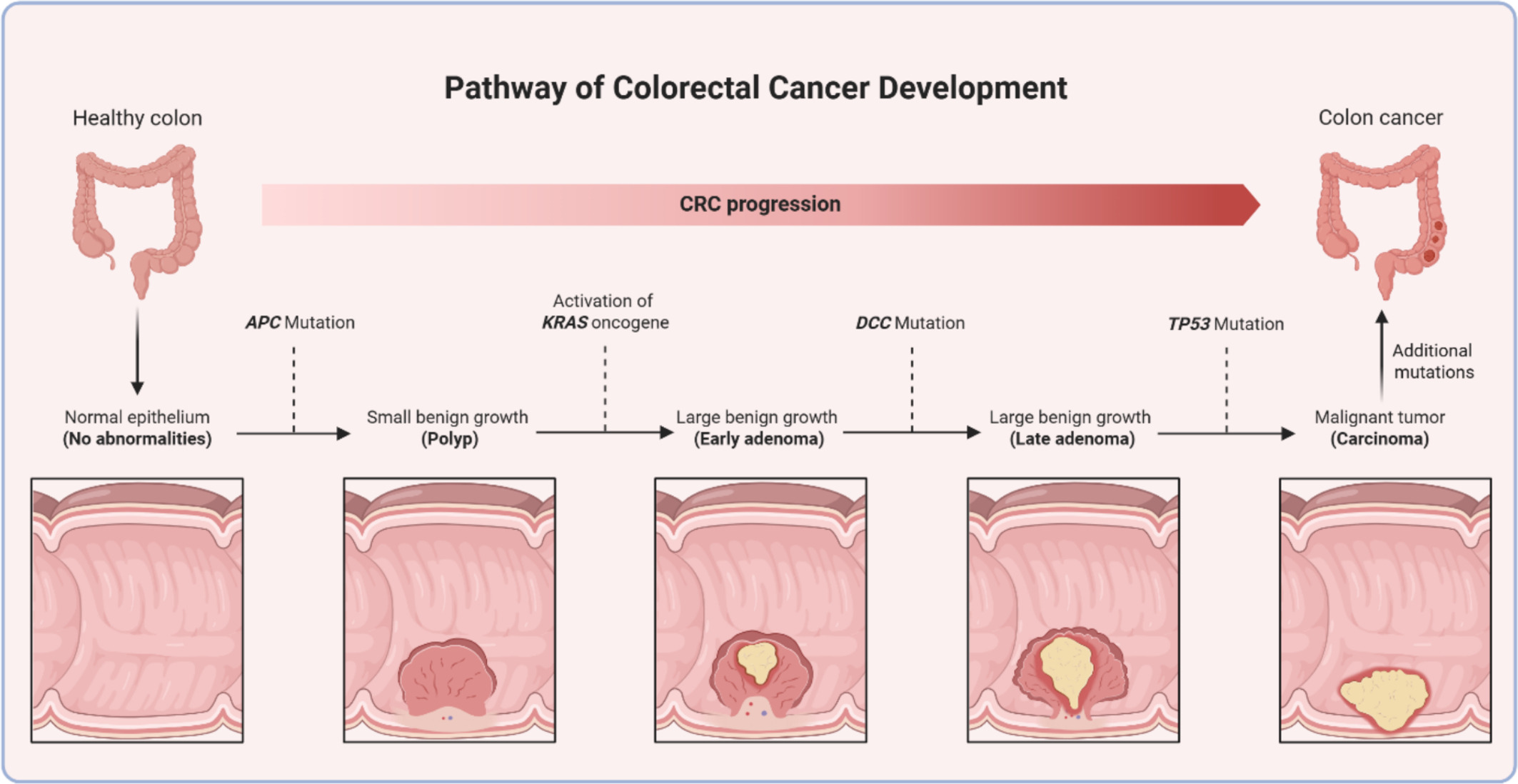
Stepwise progression of colorectal cancer, showing the transition from normal epithelium through polyp formation and adenomas to malignant carcinoma, driven by the gradual accumulation of genetic and molecular changes. Clinica Chimica Acta (2026). DOI: 10
New research offers fresh hope to patients with colorectal cancer, as advances in liquid biomarker technologies are poised to reshape detection and treatment.
SHARJAH, EMIRATE OF SHARJAH, UNITED ARAB EMIRATES, July 6, 2026 /EINPresswire.com/ -- Emerging discoveries in liquid biomarker research promise to transform early detection, diagnosis, and treatment monitoring of colorectal cancer (CRC), according to a new study, offering less invasive alternatives to traditional methods that often require surgical interventions or tissue biopsies.
The study, published in the journal Clinica Chimica Acta, reviews the literature and identifies a growing body of evidence supporting the use of novel liquid biomarkers. It also highlights their strong promise in addressing key limitations associated with traditional screening, diagnosis, and treatment approaches.
Colorectal cancer remains a primary cause of cancer-related illness and death worldwide. According to the World Health Organization (WHO), it is the third most diagnosed cancer globally and the second leading cause of cancer-related mortality.
Following an extensive review of existing literature, the authors dwell at length on current conventional approaches, such as colonoscopy and fecal-based screening tests, highlighting their vital role in lowering colorectal cancer-related deaths. However, they also stress their drawbacks. For instance, colonoscopy is invasive, as it requires bowel preparation and sedation, and fecal tests can suffer from patient adherence issues.
They underscore how recent advances in molecular biology, genomics, proteomics, metabolomics, and other omics technologies enabled researchers to discover “new biomarkers that present effective solutions for early detection and risk assessment while monitoring treatment efficacy.”
The authors argue that these emerging non-invasive biomarkers represent a major step towards early detection of colorectal cancer and the delivery of more personalized care and treatment. Their adoption could improve survival rates and at the same time reduce reliance on traditional invasive diagnostic procedures.
Emerging trends
This narrative review examines recent developments in colorectal biomarker research through the lens of emerging liquid biopsy technologies, such as circulating tumor DNA (ctDNA) and microRNAs (miRNAs), alongside genomic, epigenomic, gut microbiome, metabolomic, and proteomic markers.
The findings contribute to a growing consensus that non-invasive molecular diagnostic approaches are poised to play an increasingly important role in colorectal cancer management. These technologies, the authors maintain, have the potential to revolutionize screening programs, advance early detection and diagnosis, and ultimately improve patient outcomes.
The narrative review was conducted using a structured literature search methodology to provide comprehensive and unbiased coverage of emerging biomarkers for early detection of colorectal cancer.
To ensure comprehensive and balanced coverage of emerging biomarkers for the early detection and diagnosis of colorectal cancer, the review pursued a structured literature search methodology. Electronic databases, including PubMed/NCBI, Scopus, and Web of Science, were systematically searched for studies published between 2010 and 2025. Keywords included combinations of the terms "colorectal cancer," "early detection," "biomarkers," "ctDNA," "miRNA," "epigenetics," "microbiome," "proteomics," and "metabolomics."
Priority was given to original research articles and high-quality review papers, with particular emphasis on studies directly related to colorectal cancer. Publications were selected based on their relevance to early detection, recency, and methodological rigor. To provide a balanced synthesis of the evidence, findings from overlapping studies were critically assessed to minimize redundancy, ensure objective interpretation, and strengthen the overall analysis.
As the authors note, “The usage of biomarker-based methods demonstrates transformative potential for CRC treatment by boosting survival rates and lessening global impact through precision medicine development in oncology.”
New era and new hope
The finding that novel, non-invasive technologies could enable the early detection of colorectal cancer offers hope to millions of people affected by the deadly disease. According to the Global Cancer Observatory, colorectal cancer accounted for approximately 1.9 million new cases and 904,000 deaths worldwide in 2022.
Although the figures are already alarming, the burden of the disease is expected to increase substantially in the coming years. The authors attribute the projected hike primarily to population aging, rapid urbanization, increasing obesity rates, sedentary lifestyles, and greater consumption of red and processed meats.
They emphasize that patients diagnosed with localized colorectal cancer at an early stage benefit from highly successful treatment outcomes, with survival rates exceeding 90%. In contrast, survival rates drop below 15% when the disease is diagnosed after it has spread beyond its original site to other parts of the body.
While conventional screening methods remain valuable, the review highlights non-invasive liquid biomarkers as more precise and reliable diagnostic tools. “In colorectal cancer, biomarkers offer the potential to detect disease at an earlier stage, improve diagnostic accuracy, and personalize screening strategies,” the authors write. “Importantly, biomarkers can be detected in minimally invasive samples, such as blood or stool, making them more acceptable to patients compared to traditional colonoscopy.”
According to the authors, integrating biomarkers into colorectal cancer screening programs represents a critical step toward achieving more effective, accessible, and equitable early detection. “The fusion of biomarker-driven approaches with cutting-edge multi-omics technologies holds immense potential to revolutionize CRC management as research continues to progress,” they note. “These advantages could enhance screening compliance, facilitate early intervention, and ultimately reduce colorectal cancer-related morbidity and mortality.”
The review further suggests that biomarker profiling and personalized medicine strategies are poised to improve early diagnosis and refine treatment selection, ultimately leading to better patient outcomes. By integrating a multi-omics perspective with a strong emphasis on early detection and clinical implementation, the review provides a translational framework that bridges the gap between biomarker discovery and routine diagnostic practice.
In conclusion, the authors argue that “the field of biomarker research will remain pivotal in reducing the global burden of CRC and increasing survival rates, driven by ongoing advancements and collaborative efforts across scientific and medical communities.”
Original Source URL: DOI: 10.1016/j.cca.2026.121013
LEON BARKHO
University Of Sharjah
+971 50 165 4376
email us here
Legal Disclaimer:
EIN Presswire provides this news content "as is" without warranty of any kind. We do not accept any responsibility or liability for the accuracy, content, images, videos, licenses, completeness, legality, or reliability of the information contained in this article. If you have any complaints or copyright issues related to this article, kindly contact the author above.
